Jerry Leaves Cab Work After Falling Ill and Moves to the Countryside
Black BeautyJerry Barker’s illness turns a difficult winter’s work into a decisive break with cab driving: on medical advice, he gives up the trade, and his family finds a new life in the country. The episode follows not only his recovery and relocation but also the end of Black Beauty’s three years with a kind owner whose care had made hard work bearable.
The New Year’s work
The episode is set against the pressures of the holiday season. For cabmen and their horses, Christmas and New Year bring no holiday: parties and entertainments make work late, while drivers and horses may wait outside in rain or frost as people enjoy themselves indoors. Jerry is punctual and fair about his charges, but those qualities do not protect him from the hours imposed by customers.
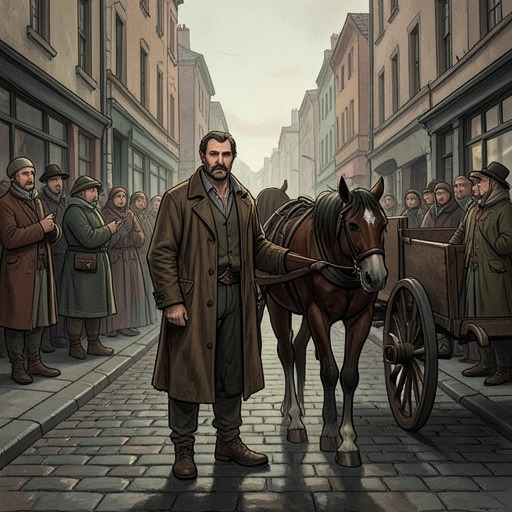
On New Year’s evening, Jerry takes two gentlemen to a party and is told to return at eleven. He is at the door on time, but the guests do not emerge when the clock strikes eleven or twelve. In driving sleet and bitter cold, Jerry adjusts Black Beauty’s cloth, stamps his feet to keep warm, and tries to shelter inside the cab when coughing makes it difficult to stand outside. At half past twelve he asks the servant whether he is still wanted and is told to wait. The passengers finally come out at a quarter past one, after keeping horse and driver waiting for two hours and a quarter. They then complain about the fare rather than apologizing. Jerry charges only what is due, but the money has been hard earned.
Illness and the end of cab work
Jerry’s cough is already bad during the Christmas week. Even after the late drive, he continues to care for Black Beauty: in a hoarse whisper and short of breath, he rubs him down, brings extra straw for his bed, and asks for something warm and gruel for himself. Polly Barker brings Black Beauty a warm mash. The contrast is central to the episode: Jerry is ill, yet his attention remains on the horse entrusted to him.
The next morning Harry cleans and feeds the horses and tends the stable. Later, Dolly accompanies him; she is crying, and Black Beauty gathers that Jerry is dangerously ill and that the doctor considers the case serious. The household is troubled over the following two days. Polly stays with her husband, who must be kept quiet, while the children take turns appearing in the stable. Governor Grant comes to ask Harry about his father. His visit makes visible the concern of the cabmen’s circle as Jerry’s illness removes him from the work on which the household has depended.
Jerry improves steadily, but the doctor’s advice sets a firm limit: if he hopes to live to old age, he must not return to cab work. The family therefore has to consider not simply whether he can recover, but how they will earn a living without his driving. The illness changes the direction of their lives; recovery cannot mean a return to the old routine.
A country future takes shape
During Jerry’s illness, Governor Grant takes Hotspur out for a week or more. When Harry thanks him, Grant makes light of the kindness, saying his own horses need a rest. His practical help gives the family some breathing room while Jerry is unable to work, without suggesting that their longer-term problem has been solved.
A letter brings that solution into view. A family acquaintance offers the Barkers a vacant cottage near her home, with a garden, henhouse, and apple trees. She expects to need a coachman in the spring, and there are other possible positions nearby: Harry might find work in a garden or stable, and Dolly could attend a good school. The news gives the family a concrete alternative to the cab trade, combining a place to live with possible work for several members. Harry is pleased but rejects the prospect of becoming a page-boy, preferring work as a groom or gardener.
The family quickly agrees that they will move to the country as soon as Jerry is well enough, and that the cab and horses will be sold as soon as possible. Grant says he will take Hotspur. Other men at the stand are willing to buy Black Beauty, but Jerry does not want him sent back to cab work with just anyone. Grant promises to find a place where the horse will be comfortable. The decision reflects both the necessity of selling the cab business and Jerry’s continuing responsibility toward the horse’s future.
Parting and significance
For Black Beauty, the move carries a separate loss. He is no longer young, and three years of cab work have diminished his strength even though Jerry treated him well and did not overwork him. Since leaving Birtwick, he has been happiest with Jerry; the sale of the cab and horses therefore means losing the home and companionship that had made his working life comparatively secure.
Jerry has not yet been allowed out when the family leaves, and Black Beauty never sees him again after New Year’s Eve. Polly and the children come to say goodbye. Polly wishes they could take the old horse with them, lays a hand on his mane, and kisses him; Dolly also kisses him, while Harry strokes him quietly, visibly saddened. Black Beauty is led away to a new place. The farewell closes the household chapter without diminishing the affection within it: Jerry’s illness forces his retirement, but the family’s plans and his concern over Black Beauty’s sale show that leaving the cab trade is also an effort to secure a gentler future for those in his care.